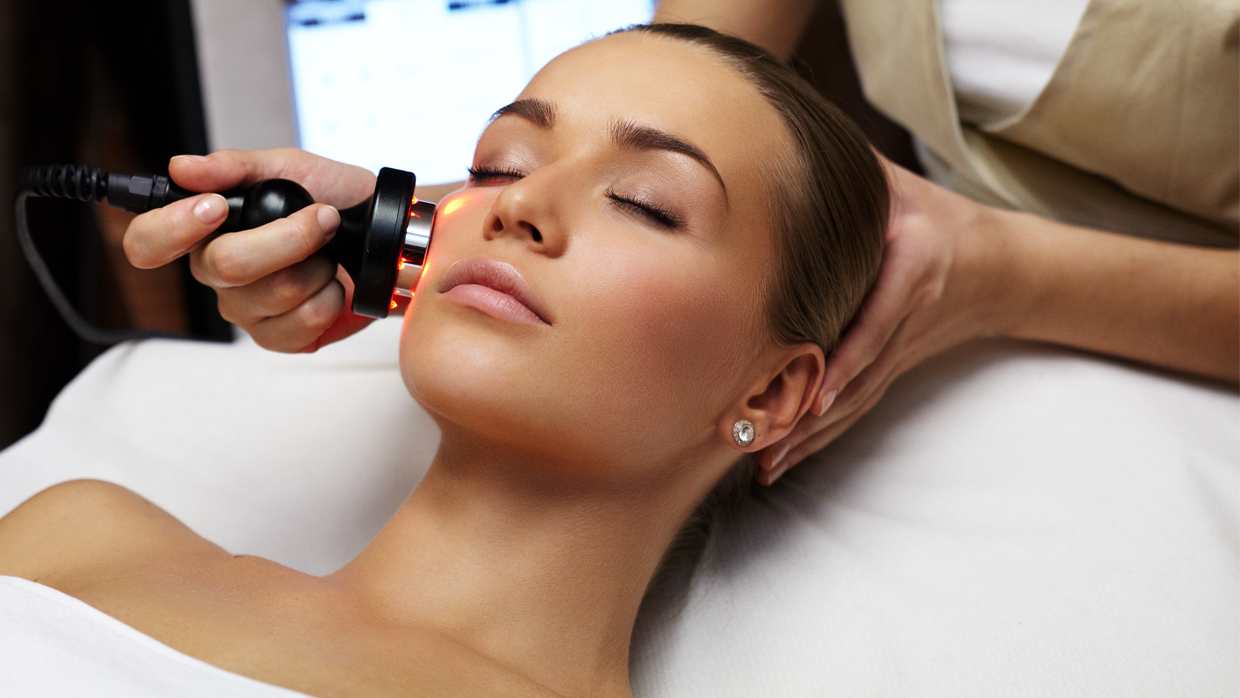
If you are tired of shaving, looking for a more even skin tone, or want to tighten and firm your skin this is the special for you! This month only, purchase 4 laser treatments, receive a 5th laser treatment of equal or lesser value FREE! This will include laser hair removal treatments, phototherapy for reds and browns, and skintyte/skinfirming treatments.
We use an Intense Pulse Light (IPL) laser to provide safe, rapid hair reduction. This treatment is ideally suited for dark, coarse hair and will typically require 4-6 treatments.
Phototherapy is a treatment with no downtime and can target reds and/or brown spots on almost any area. Treatments are customized to meet your desired results. With this treatment we focus on skin conditions caused by aging, genetics and sun damage.
Skintyte procedures us the laser to deliver wavelengths of light energy to penetrate deep into the dermal layer of the skin to stimulate collagen production. This treatment will firm and tighten the skin. Skintyte is ideal for loose skin around the eyes, mouth, cheeks and neck.
MiraDry is the only noninvasive, FDA-cleared treatment that will free you from the bothersome problems of underarm sweat. By eliminating the sweat and odor glands, you can feel confident that your underarms will remain dry in any situation.
What is the miraDry treatment?
miraDry is the only noninvasive, FDA-cleared treatment that will free you from the bothersome problems of underarm sweat. By eliminating the sweat and odor glands, you can feel confident that your underarms will remain dry in any situation.
Don't I need sweat glands?
Not in your armpits! You are born with approximately 2 million sweat glands throughout your body. Your underarms only contain about 2% of those glands. After your miraDry treatment you will experience the many benefits of dry underarms, and you will continue to perspire normally elsewhere.
What is the treatment like?
You will be in a reclined position for about one hour. You aren’t likely to feel anything during the treatment since your underarms will be numbed prior to treatment. After treatment, you may experience swelling, soreness, tingling and numbness in the treated area. These sensations typically clear-up within a few days to a few weeks.
How does it work?
The miraDry system uses proprietary miraWave energy that targets and destroys sweat and odor glands in your underarm. Once those glands are destroyed they do not grow back so that means once they are gone, they are gone for good
What results can I expect?
You can expect to have an immediate reduction in your sweat. Sweat glands don’t grow back so you should experience results that last. The amount of sweat reduction you desire should be discussed with your miraDry physician. As with any treatment, the results may vary from person to person.
How many treatments will I need?
You will see results in as little as one treatment. However, as with any aesthetic treatment, your physician will determine the best treatment plan for your desired results.
Is the treatment painless?
Since your underarms are numbed prior to treatment, most patients experience little to no pain.
Is there any downtime?
Depending on what your typical day is like, downtime can be minimal to none. Most patients return to regular activity (like returning to work) immediately. Exercise and vigorous activity is typically resumed within several days. You may experience discomfort in your armpits for several day post treatment.
Is it safe?
Yes, miraDry has been used in over 55,000 treatments worldwide with an excellent safety record.
Are there any side effects?
After treatment, you may experience temporary swelling, soreness, tingling and numbness in the treated area. These sensations typically clear up within a few days to a few weeks. There have been no reports of permanent side effects; however, some patients experience short-term altered sensation in the skin of their underarms or upper arms, which gradually disappears. Please consult with your physicians for all possible side effects and to see if miraDry is right for you.