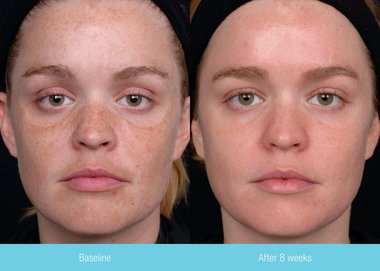
The purpose of any facial is to create healthier, better looking skin. To achieve these goals of healthier, better looking skin a facial must contain certain basic steps in order to produce real results. The essential steps of a facial are cleansing the skin, the application of an exfoliant through a chemical (peel) or mechanical process such as microdermabrasion or dermaplane, and then extractions. The more thorough these steps are completed the better the results and the better your skin will look; hence, the popularity of the HydraFacial.
The HydraFacial uses advanced patented technologies to maximize the basic steps of a facial by using the soothing nature and cleansing action of swirling, fortified water. The resulting effect is an astonishingly deeper yet gentler cleansing step followed by an exfoliation step that is significantly better than microdermabrasion and termed Hydra-dermabrasion. Hydra-dermabrasion has the additional benefit of setting the stage for a more thorough yet less traumatic extraction process.
The HydraFacial treatment doesn’t stop at the basic three steps; it includes the additional step and benefit of infusing antioxidants into the skin, which not only hydrates the skin but decreases inflammation, reverses sun damage, and protects the skin’s collagen fibers and enzyme systems. The treatment has been shown through clinical studies to replace damaged tissue and produce new collagen fibers.
If you have problematic skin or chronic facial redness the system contains LED red and blue light attachments that can be applied with the HydraFacial to further reduce acne break-outs and substantially reduce redness, even after only one treatment.
See the immediate benefits from this one of a kind facial. We are proud to offer the HydraFacial treatment to our clients!
You go to great lengths to keep your skin looking its best by using serums, creams and receiving skin treatments, all of which play an important part in managing healthy-looking skin. However, it’s also important to understand what’s happening underneath your skin to affect its pigmentation, or color. So, lets dive into what pigmentation is and how it can be treated.
What is pigmentation?
Pigmentation is the color of a person’s skin. There are also two types of pigmentation, hyperpigmentation (darker) and hypopigmentation (lighter).
What causes changes in pigmentation?
Most of what we perceive as aging is caused by factors that you can control, the main one being the amount of time your skin spends exposed to the sun. Excessive sun exposure may be responsible for structural changes in the skin that will not be seen for years and can also cause drastic changes to your skin’s pigmentation.
The sun’s rays speed up how active your skin cells, or melanocytes, are. Melanocytes produce melanin, the pigment that gives your skin its color, so more exposure to the sun means more pigment in your skin.
Pigmentation changes may also take place in those who have darker skin, as dark skin tends to have more melanin, which makes one more susceptible to a condition known as melasma. Also known as “pregnancy mask,” melasma is characterized by brown or tan patches on the face and is caused by a change in hormone levels.
Additionally, changes in pigmentation may also be attributed to post-inflammatory hyperpigmentation (PIH). PIH, which is caused by trauma to the skin such as acne, these are dark spots that remain long after the initial inflammation has healed.
Treatment and prevention
The good news is that you can manage pigmentation changes to your skin by limiting your exposure to the sun and avoiding unnecessary trauma to your skin. Some easy-to-follow recommendations include wearing an SPF 30 or higher every day, bringing a hat or umbrella for further protection from the sun, and always wearing sunglasses.
Hydroquinone is considered by many to be the gold standard for treating pigmentation issues and is a key ingredient in the Obagi Nu Derm System which is ideal for treating age spots, dark spots, and melasma.
We offer our clients a free Visia Skin Analysis to determine the best treatment option for maximum results.